Be honest, do you see a dove here?
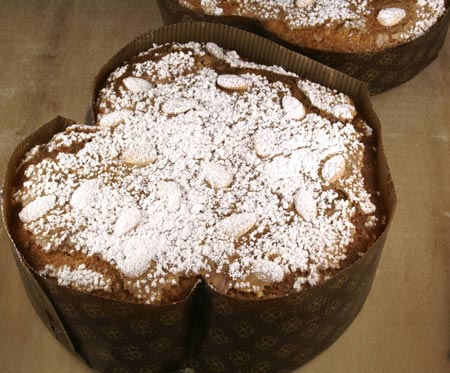
Me neither. How about now?
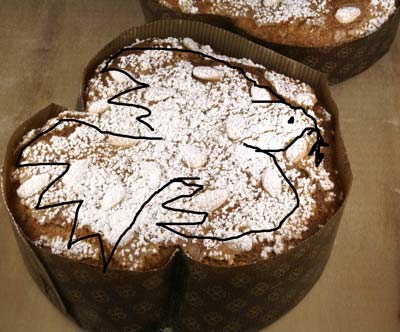
Okay, I admit it’s a stretch. But unable to find the paper dove-shaped molds that I should have used to bake Colomba di Pasqua, the traditional Italian Easter bread, I resorted to trying to make my own. Two 3-inch deep, 10-inch diameter paper pans with a few strategically placed staples were going to have to do.
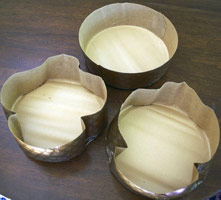
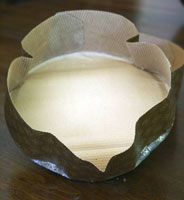
Next time I will cut about an inch off the top of the pan so the dove can rise and soar above it instead of being trapped in a paper cage. Actually, there won’t be a next time for these makeshift molds, as I’m going now to order my genuine Italian Colomba pans for next year.
I adapted the recipe from the English translation of Cresci: The Art of Leavened Dough by Iginio Massari and Achille Zoia. I have had this opulent (and unfortunately out-of-print) book for a while, and regularly open it when I’m in the mood for a good drool, but had never baked from it before.
The formula is remarkably similar to the one I use for Panettone, but a little sweeter and richer. I built the sweet starter according to the same method I use for that other classic Italian holiday bread. Instead of using my tried-and-true mixing method for sweet enriched breads, where the sugar is added gradually and the dough is mixed to full gluten development before adding the butter, I followed the method given in Cresci, adding sugar initially in the first dough, and butter and sugar at once in the final dough.
 Legality and prevalence notwithstanding, doing right is important, and it has always been my belief and intention that when I post my take on another person’s recipes, I respectfully communicate my admiration for that person and their work, while sharing my own thoughts and processes. However, my recent posting of an adaptation of